
Dear cooperators and friends,
Competition from national chains has forced the closure of over 40% of independent rural grocery stores since the 1990s at the same time as a generation of small town grocers retire. Rural communities are organizing to reverse this trend, not just through organizing brand new startup grocery co-ops, but by rallying their communities to collectively purchase closing stores, turning them into food cooperatives.
At Food Co-op Initative, we call this type of startup grocery co-op a “conversion.” Rural communities converting grocery stores have called FCI throughout its 20+ year history. There’s been a huge jump in the number of these calls in the last two years as communities work to avert the closure of grocery stores.
What FCI is seeing: Conversion co-ops are popping up almost exclusively in USDA rural communities but are pretty evenly split between those featuring a conventional product mix and those with a natural product mix. Communities are converting existing stores much faster than new startups are opening stores, often due to urgency from retiring owners, and the need to quickly save jobs and food access.
The needs of these conversion startup projects are different. They have to grapple with how to value an existing business, while formulating what the co-op can afford to pay for the business based on historical financials and market potential. They have to build ownership quickly, in startup terms, while holding the owner’s confidence in community interest and capacity.
What FCI is doing: FCI released, with our partners at the Rural Grocery Initiative (RGI), the Converting Your Grocery Store to a Co-op Action Guide in 2024, and began offering Peer Learning Groups just for organizing conversion grocery co-ops in 2025, with the number of participating startups doubling in 2026. FCI will be working more in-depth with RGI and several regional co-op development centers across the US over the next year to collectively create a list of existing resources for conversions and to build a fuller Co-op Conversion Toolkit.
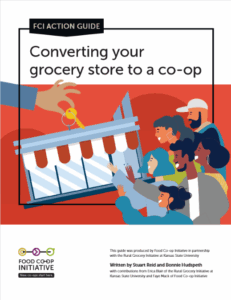
If your community is interested in learning more about how to keep the local grocery store operating in your community, take a look at the Action Guide and accompanying video, as well as this panel discussion with inspiration from three communities that recently transferred operation of their local grocery store to a community-owned co-op. Then reach out to info@fci.coop to learn about next steps.